On this page
CircleChess is a legitimate Bengaluru online academy with GM Vishnu Prasanna's curriculum, two live classes weekly, ~₹3,700–4,500/mo (intermediate, July 2026).

Day-to-day coach at ChessWize. 7+ years training students aged 5–15 across India, the USA, the UK, Singapore, Australia, and the Middle East. Known for structured, interactive sessions that turn nervous beginners into tournament-ready players.
CircleChess Review for Parents: Price, Coaches, and Honest Verdict#
By Coach Hrdyansh Pandey · Last updated 16 July 2026
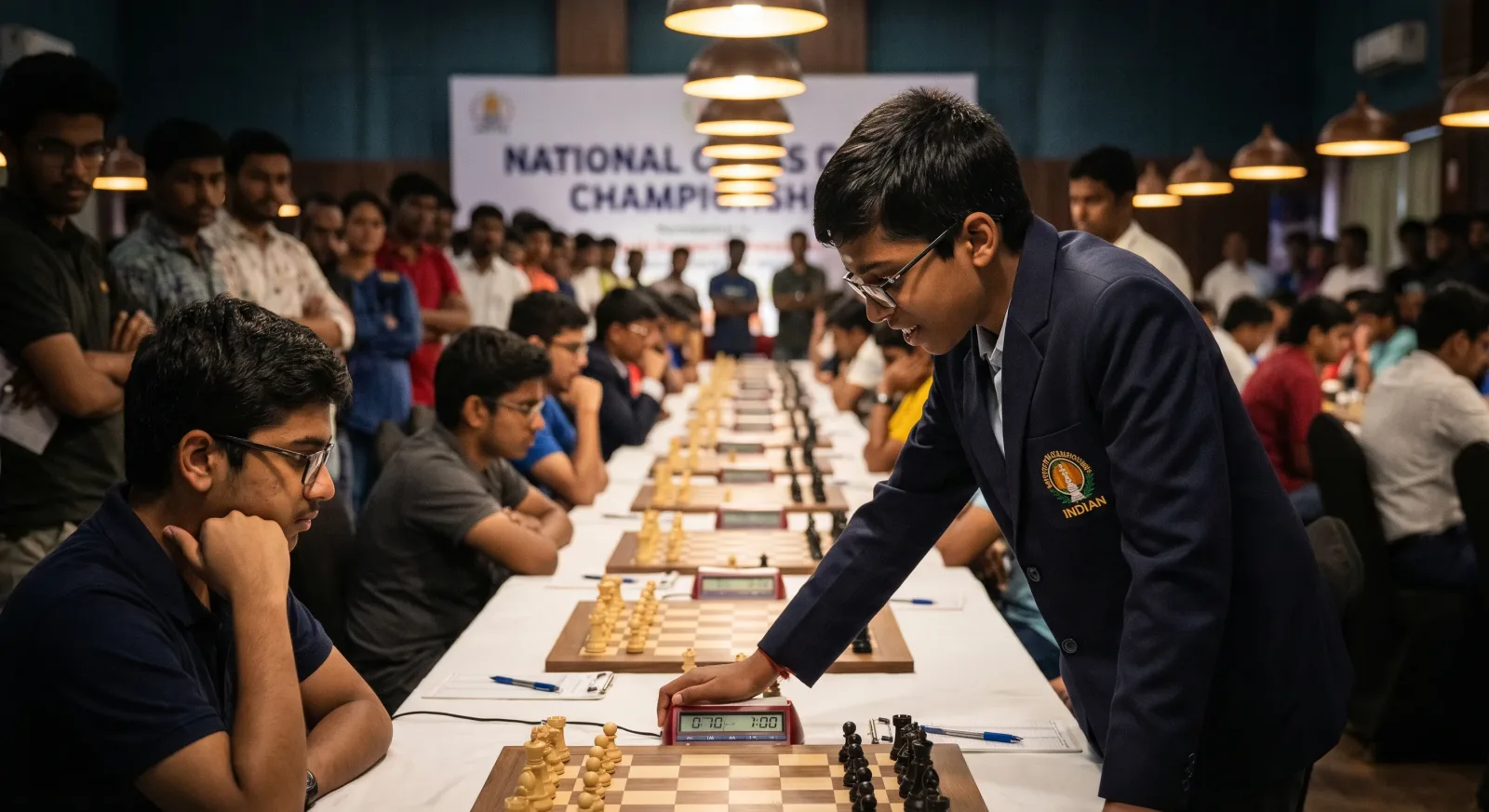
CircleChess is a Bengaluru-based online chess academy whose kids’ programme, the Caissa School of Chess, runs two live classes a week from age 4. It is a legitimate, GM-led operation with clear strengths and a few gaps parents should check before paying. This review is fair, dated, and checkable, with our own bias disclosed below.
Disclosure: ChessWize, the site you are reading, runs one of the alternatives discussed here. We teach ages 5–15 online only — no physical centre — with group sessions from ₹375 per class, two-on-one from ₹550, and 1:1 from ₹1,000, plus a starter pack of ₹2,500 for eight classes. We hold a 5.0 rating on Google from 21 reviews, cap batches at six, and offer a complimentary 30-minute demo. Read this review the way you would read CircleChess’s own “best academies” lists: useful, but written by a competitor.
What is CircleChess and who runs it?#
CircleChess is an online chess education company founded in Bengaluru in 2023 by Kumar Gaurav and Swati Agrawal. Its children’s programme is called the Caissa School of Chess. GM Vishnu Prasanna, the coach who trained world champion Gukesh Dommaraju from 2017 to 2022, designs the curriculum as Chief Chess Officer.
That coaching pedigree is the headline. Gukesh himself signed on as brand ambassador, and the company states it employs 150+ certified, background-checked coaches (per circlechess.com, verified 16 July 2026). Beyond classes, CircleChess operates a wider ecosystem: the Caissa AI training app, internal student tournaments, and separate tournament-organizer software used by event organizers across India.
One number to read carefully: CircleChess describes itself as serving “5,000+ families in 30+ countries.” That figure is the company’s own, self-reported claim — we found no independent verification of it, which does not make it false, only unaudited. When you compare academies, treat self-reported scale the same way everywhere: a signal of ambition, not proof of quality.
If you are building a shortlist from scratch, our chess coaching comparisons hub collects side-by-side reviews of the major Indian options, and the best online chess classes for kids in India roundup places CircleChess in context with dated pricing from each academy’s own site.
How much does CircleChess cost in 2026?#
On the Caissa School of Chess pricing page (fetched 16 July 2026), the intermediate tier costs ₹12,150 for 3 months, ₹23,625 for 6 months, ₹40,500 for 9 months, and ₹44,550 for 12 months — between roughly ₹3,700 and ₹4,500 a month depending on how long you commit.
| Plan (intermediate tier) | Total price | Works out to |
|---|---|---|
| 3 months (“Sharper Calculation”, 10% off) | ₹12,150 | ₹4,050/month |
| 6 months (“Strategic Depth”, 13% off) | ₹23,625 | ~₹3,938/month |
| 9 months (“Compete with Confidence”) | ₹40,500 | ₹4,500/month |
| 12 months (“Tournament-Ready”, 18% off) | ₹44,550 | ~₹3,713/month |
Prices from circlechess.com/caissa-school-of-chess, fetched 16 July 2026. These figures cover the intermediate level only — beginner and advanced tiers were not fetched for this review and may price differently. Chess academy prices change often; treat this table as a dated snapshot and confirm on their site.
Two commitments soften the price risk. First, the demo class is free, needs no card, and CircleChess says a consultation follows within 24 hours of booking. Second, a 7-day money-back window applies after enrolment: a full refund if you are unsatisfied within the first week, per the same pricing page.
For context, ChessGaja publishes group classes at ₹3,250/month and Kingdom of Chess packages work out to roughly ₹200–₹290 per session on its programme page (both verified 16 July 2026). ChessWize’s published per-session rates start lower — group from ₹375, two-on-one from ₹550, 1:1 from ₹1,000 — though package totals depend on how many sessions you book. Our cost of chess coaching for kids in India guide walks through the full market picture.
What do you get each week at the Caissa School of Chess?#
A Caissa School of Chess plan includes two live classes a week of 45–60 minutes each, weekly assignments, internal tournaments, access to the Caissa AI training app, and a monthly parent-teacher meeting. Both small-group and one-to-one options exist, though the exact group-size cap is not published on the pricing page.
The monthly parent-teacher meeting deserves a mention because many Indian online academies offer nothing structured for parents at all. If you want to know what your child is actually working on, a scheduled monthly conversation with the coach is genuinely useful — ask in the demo whether it is with the class coach or a counsellor.
The AI app is a supplement, not the product. Treat it the way you would treat puzzle apps generally: helpful for practice between classes, not a substitute for the live coaching you are paying for. Our ChessWize vs ChessKid comparison and the broader chess coaching vs chess apps guide explain why self-paced tools alone rarely move a competitive child forward — and why the smartest families combine both.
Where does CircleChess win?#
CircleChess’s strengths are real, and a fair review should lead with them: curriculum design by a world-champion-maker, an unusually large coaching bench, a full tournament ecosystem, and a published money-back window. For a parent shortlisting Indian online academies in 2026, it belongs on the shortlist.
Where they win, specifically:
- Coaching pedigree nobody in this market matches. GM Vishnu Prasanna coached Gukesh through his rise from 2017 to 2022, and now designs the Caissa curriculum. Whatever else you weigh, “the world champion’s childhood coach wrote the syllabus” is a claim no other Indian kids’ academy can make (verified 16 July 2026).
- Scale of the coach roster. 150+ certified, background-checked coaches (their published figure, 16 July 2026) means slot availability and coach replacement are unlikely to be problems.
- A real competitive ecosystem. Internal tournaments are built into every plan, and the company runs branded open events in India, so the path from class to competition is inside one organisation. If your child is heading toward a first rated tournament, that pipeline matters — though over-the-board AICF events still require separate preparation for clocks and notation.
- Published, dated refund terms. A 7-day full-refund window and a bold rating-linked refund promise (examined next) are printed on the pricing page — most competitors offer vaguer comfort.
What exactly is the “FIDE Rating Guarantee”?#
CircleChess advertises a “FIDE Rating Guarantee”: if your child does not earn a FIDE rating within a year, the company promises a 100% fee refund. That is CircleChess’s own published claim (seen 16 July 2026 on its pricing page), reported here with attribution — it is not our endorsement of the outcome.
FIDE (the International Chess Federation) issues ratings through sanctioned over-the-board play, per its published handbook — not through online puzzle ratings or app scores. Before you treat CircleChess’s promise as a safety net, get its written terms and ask the practical questions: Which tournaments qualify, and who pays entry and travel? What attendance or assignment conditions must the child meet to stay eligible? What happens if suitable rated events are not held near you within the year?
For our part: ChessWize makes no rating promises, on principle. No academy controls how quickly a specific child gains a rating — preparation is coachable, results are not. A refund-backed promise shifts financial risk, which has genuine value; it does not change what any coach can honestly control. Our FIDE rating and Elo guide for kids explains how ratings actually appear once a child starts playing sanctioned games — typically four to six weeks after a first rated result is processed, which is an administrative timeline, not a coaching promise.
How I evaluate a CircleChess demo: a coach’s walkthrough#
When parents ask me whether CircleChess — or any large academy — is worth the monthly fee, I tell them to treat the free demo like a job interview for the person who will actually teach their child, not like a product tour of the brand. I have sat through hundreds of competitor demos over seven years of coaching, and the pattern is predictable: the first ten minutes sell the curriculum pedigree, and the last ten minutes reveal whether anyone in the room understands your child. Here is the method I use when a parent forwards me notes from a CircleChess trial.
Minutes 0–5: who is in the room? The first question is not “was the GM mentioned?” — of course he was. The question is whether the coach running the demo is the coach who would teach your child weekly, or a sales-facing instructor who hands off after enrolment. At CircleChess’s scale, rotation is a real possibility even when marketing emphasises certified coaches. Ask directly: “If we enrol today, is this the person on our calendar every Tuesday?” Write down the name. If the answer is vague, that vagueness will cost you later.
Minutes 5–15: diagnosis before teaching. A serious coach spends the opening segment finding out what the child already knows — not delivering a polished lesson about the Italian Game. I watch for three things: does the coach ask the child to explain a rule back (“where does the knight go from here?”), do they set one puzzle slightly above comfort level, and do they adjust when the child stalls? CircleChess’s curriculum is structured by design; what you are testing is whether the human in front of your child can depart from the script when the script does not fit.
Minutes 15–30: how wrong answers are handled. Every child gets something wrong in a proper trial. The coach who says “no, that’s incorrect” and moves on is teaching chess moves. The coach who says “good try — most kids play that because the bishop looks active; let’s see what happens after …” is teaching thinking. That second habit is what you are paying for at any academy, CircleChess included. I tell parents to note the exact sentence the coach used on the first mistake — it predicts three months of sessions better than any brochure.
Minutes 30–40: the parent segment. CircleChess includes monthly PTMs in every plan, which is more parent-facing structure than many rivals offer. In the demo, ask what those meetings cover: generic progress slides, or specific games your child played that week? A PTM that recycles marketing language is worthless; one that names a concrete weakness (“he calculates one move deep in knight forks but misses the second”) is worth the subscription.
After the call: the written follow-up test. CircleChess says a consultation follows within 24 hours of booking — use that message as a quality signal. Does it mention your child’s name, level, and one specific observation from the trial? Or is it a template? I advise parents to book CircleChess and one smaller academy — ChessWize, ChessGaja, or Kingdom of Chess — in the same week and compare follow-up emails side by side. The academy that diagnoses your child in writing is usually the academy that will track them in month three.
This walkthrough is the same framework in our how to pick a chess coach guide. Credentials get an academy onto the shortlist; demo behaviour keeps it there.
What should parents check before enrolling?#
The checkable gaps in CircleChess’s public information are specific: no published group-size cap, no stated recording policy on the pricing page, rupee pricing on its USA-targeted page, and self-reported satisfaction figures. None is disqualifying; each is a question you should get answered in writing at the demo.
Take this checklist into the free demo:
- “What is the maximum number of children in my child’s batch?” The site advertises small-group and 1:1 options but publishes no group-size cap (pricing page, 16 July 2026). Group size changes how much board time your child actually gets — ChessWize caps batches at six and states it on our courses page; CircleChess requires you to ask.
- “Are classes recorded, and do we get the recordings?” The pricing page we fetched does not state a recording policy either way (16 July 2026). For a child who misses a class, this matters.
- “What currency will I be billed in?” Our audit found the USA-targeted landing page still quotes prices in rupees. NRI parents should confirm billing currency and payment method before enrolling.
- “Can I see the FIDE Rating Guarantee terms in writing?” See the section above — get eligibility conditions, qualifying events, and who bears tournament costs on paper.
- Treat their academy rankings as marketing. CircleChess publishes long “best online chess academies in India” articles that rank CircleChess first. That is normal marketing practice — ours carry the same bias, which is why this review discloses it — but it is not independent evidence.
Expert tips from seven years of coaching against large academies#
These are the shortcuts I give parents who call me after a CircleChess demo:
- Book two demos in the same week. Pedigree on a website and rapport in a Zoom room are different products. CircleChess’s GM story is real; your child’s weekly coach may be a strong club player you have never heard of. Compare two academies while memory is fresh.
- Ask for one recent game your demo coach reviewed. Academies with real teaching depth can show you anonymised student work — a commented game, a puzzle set assigned to a child at a similar level. A refusal is not fatal, but a concrete example is the fastest way to see whether “GM-designed curriculum” reaches the classroom.
- Separate the app from the class in your budget head. Caissa’s AI app is included, which sounds like value. If your child already uses ChessKid or free Lichess puzzles, you may be paying for duplicate practice. Decide whether the live coach or the app is the reason you are enrolling.
- Get tournament logistics on paper before the rating promise matters. CircleChess’s refund-backed rating claim only becomes relevant once you know which OTB events count, who registers the child with AICF, and who pays travel. A rating promise without a tournament plan is marketing; with a plan, it is a serious commitment.
- Watch your child’s face when the demo ends. Credentials get CircleChess onto the shortlist; your child’s willingness to open the board again tomorrow keeps any academy on it. A child who asks “when is the next class?” is telling you more than any comparison table.
Who is CircleChess a good fit for?#
CircleChess fits a family that wants a large, structured academy with a GM-designed curriculum, a built-in tournament pipeline, and an app for between-class practice — and that is comfortable doing its own diligence on batch size and guarantee terms at the demo stage.
Choose CircleChess if the brand-name curriculum and one-organisation path from first lesson to rated tournament appeal to you, and the roughly ₹3,700–4,500 monthly cost (intermediate tier, July 2026) fits your budget. Look elsewhere if you want a published small-group cap before paying, a stated recording policy, or a promised single coach for the whole journey — none of those is promised on the pages we fetched.
Families comparing structured academies should also read our Kingdom of Chess alternatives guide — another large Indian programme with published group caps — and our ChessKid vs live coaching piece if the child is still deciding between apps and classes.
What are the alternatives to CircleChess?#
The realistic alternatives to CircleChess are a self-paced platform like ChessKid for casual learners, another structured Indian academy — several are compared in our guide to the best online chess classes for kids in India — or a smaller coach-led academy like ChessWize, which publishes this site.
Disclosure: ChessWize is our academy. Treat this paragraph as our pitch, not neutral advice. ChessWize teaches ages 5–15 online only, with batches capped at six. Published pricing: group sessions from ₹375 per class, two-on-one from ₹550, 1:1 from ₹1,000, and a starter pack of ₹2,500 for eight classes. The commitments we publish are operational, not outcome-based: the same coach every session with no rotation, a weekly WhatsApp report for every student, a complimentary 30-minute level check before you commit, a 100% refund on unused sessions, and a 5.0 Google rating from 21 reviews. We make no rating promises.
The honest comparison: CircleChess is bigger, carries the stronger celebrity pedigree, and bundles an app and tournament ecosystem. ChessWize is smaller and bets everything on coach continuity and week-by-week parent visibility. Both offer free first sessions, so the cheapest diligence is to attend both demos in the same week and watch which coach gets your child talking. See our coaches page for named FIDE profiles, the compare hub for side-by-side pages, and online chess classes for kids for how live sessions work in practice.
Frequently Asked Questions#
Is CircleChess a legitimate chess academy?#
Yes. CircleChess is a real Bengaluru company founded in 2023, with GM Vishnu Prasanna — world champion Gukesh’s former coach — designing its Caissa School of Chess curriculum. Its scale claims (5,000+ families in 30+ countries) are self-reported, so treat those specific numbers as marketing.
How much does CircleChess cost per month?#
The intermediate tier of the Caissa School of Chess works out to roughly ₹3,700–₹4,500 per month depending on plan length: ₹12,150 for 3 months up to ₹44,550 for 12 months, per the pricing page fetched on 16 July 2026. Other levels may price differently.
Does CircleChess really guarantee a FIDE rating?#
CircleChess advertises a “FIDE Rating Guarantee” promising a 100% refund if your child does not earn a FIDE rating within a year. That is the company’s own published claim, not an independently verified outcome. Ask for the written terms and eligibility conditions before relying on it.
What ages does CircleChess accept?#
CircleChess says the Caissa School of Chess is designed for all ages starting from 4 years old, per its site on 16 July 2026. Classes run in small groups or one-to-one, though the site does not publish an exact group-size cap for each level.
Does CircleChess offer a free trial?#
Yes. CircleChess offers a free demo class with no card required, and says a consultation follows within 24 hours of booking. A 7-day money-back window also applies after enrolment — a full refund if you are unsatisfied within the first week, per its pricing page.
How is ChessWize different from CircleChess?#
ChessWize — the academy publishing this review — teaches ages 5–15, keeps the same coach every session, sends weekly WhatsApp progress reports, and refunds unused sessions in full. CircleChess is a larger ecosystem with a GM-designed curriculum. Try both demo classes and compare how each coach handles your child.
Back to the hub: Chess coaching comparisons.
Return to the main pillar: Online chess coaching for kids in India.
Hrdyansh Pandey
Day-to-day coach at ChessWize. 7+ years training students aged 5–15 across India, the USA, the UK, Singapore, Australia, and the Middle East. Known for structured, interactive sessions that turn nervous beginners into tournament-ready players.
View FIDE ProfileReferences & Sources
- [01] Caissa School of Chess intermediate-tier pricing ₹12,150/3mo · ₹23,625/6mo · ₹40,500/9mo · ₹44,550/12mo — circlechess.com/caissa-school-of-chess, fetched 2026-07-16
- [02] GM Vishnu Prasanna (Gukesh D's coach 2017–22) heads the CircleChess curriculum; 150+ certified coaches — circlechess.com, verified 2026-07-16
- [03] CircleChess 'FIDE Rating Guarantee' — FIDE rating within a year or 100% fee refund, their published claim — circlechess.com/caissa-school-of-chess, seen 2026-07-16
- [04] CircleChess founded in Bengaluru in 2023 by Kumar Gaurav and Swati Agrawal; Gukesh Dommaraju is brand ambassador — circlechess.com, recorded 2026-07-16
- [05] FIDE issues player ratings through sanctioned over-the-board play — fide.com/handbook, accessed 2026-07-16
- [06] ChessKid restricts chat to preset phrases for child safety — chesskid.com/safety, accessed 2026-07-16