
“We'd done six months of YouTube and a free Chess.com account before we found ChessWize. The first ChessWize session, the coach said three things about Aadvik's play that no video could ever have caught — including a habit he didn't even realise he had. That was the difference.”

Compare ChessWize, apps and tutors
Side by side with free YouTube, app-only learning (Chess.com / Lichess), local in-person classes, and private home tutors. We include where we do not win.
Batches of max 6 · Same coach every session · 1,500+ parents
When ChessWize is the better pick
Pick us when you want a structured curriculum, one experienced coach for the whole programme, and weekly parent notes. An app is cheaper if you only want puzzles. A relative is free if you only want occasional games. Choose by what you are trying to achieve. The matrix below includes where we lose.
ChessWize vs the options most parents weigh
Local academy, app-only learning, private tutor.
Strength Mixed Gap
| Parent priority | ChessWize | Local academy | App-only | Private tutor |
|---|---|---|---|---|
Experienced coaches | Always | Sometimes | Never | Sometimes |
Class size | ≤ 6 (or 1:1) | 12 – 20 | No live class | 1 |
Personalised roadmap | Yes | No | Generic | Yes |
Weekly progress report | WhatsApp + dashboard | None | Stats only | Verbal |
Tournament prep | Built-in | Sometimes | None | Maybe |
Parent visibility | Weekly + sit-in | None | None | Verbal |
Refund policy | 48-hour full refund (monthly); 7-day pro-rated (term packages) | None | N/A | Negotiated |
Cost / session | ₹375 – ₹1,000 | ₹500 – ₹800 | ₹0 – ₹400 | ₹1,500 – ₹3,000 |
Experienced coaches
ChessWizeAlways
Local academySometimes
App-onlyNever
Private tutorSometimes
Class size
ChessWize≤ 6 (or 1:1)
Local academy12 – 20
App-onlyNo live class
Private tutor1
Personalised roadmap
ChessWizeYes
Local academyNo
App-onlyGeneric
Private tutorYes
Weekly progress report
ChessWizeWhatsApp + dashboard
Local academyNone
App-onlyStats only
Private tutorVerbal
Tournament prep
ChessWizeBuilt-in
Local academySometimes
App-onlyNone
Private tutorMaybe
Parent visibility
ChessWizeWeekly + sit-in
Local academyNone
App-onlyNone
Private tutorVerbal
Refund policy
ChessWize48-hour full refund (monthly); 7-day pro-rated (term packages)
Local academyNone
App-onlyN/A
Private tutorNegotiated
Cost / session
ChessWize₹375 – ₹1,000
Local academy₹500 – ₹800
App-only₹0 – ₹400
Private tutor₹1,500 – ₹3,000
Book a level check and see the fit for your child
A free 30-minute session with a coach. They diagnose level, write a one-page report, and recommend a programme.
From ₹2,500 for 8 classes · 1,500+ parents · Full refund within 48 hours (monthly plans)
When to pick something else
Cases where ChessWize is the wrong choice
We are not trying to be every format. These three situations are better served elsewhere.

Your child wants pure puzzle gamification
If badges, bots, and streak counters are the main draw, ChessKid or Chess.com fits better than a live class.

Your child needs offline peer competition
In-person school clubs and local tournaments give social pressure a Zoom room cannot. Use us alongside that, or join a local club first.

Your child is already advanced tier
Players past our senior cohort need a titled private coach (IM/GM). We will say so at the level check if that is the case.
Longer write-ups
Brand-by-brand comparisons
Longer articles if you are comparing one app or platform.
Decision framework
How to evaluate a chess coach
Five checks that work for ChessWize or any other academy.

01
Verify FIDE rating
Ask for the coach's FIDE ID and check at ratings.fide.com. Do not accept "I'm about 1800". Look it up.
02
Ask for 2 sample lesson plans
A working coach can show what they would cover in 2-3 sessions for your child's level. Vague answers are a warning sign.
03
Confirm the same coach attends every session
Many academies rotate coaches. Ask: “Is it the same mentor every time?” Rebuilding trust each week wastes months.
04
Confirm weekly parent reporting
Monthly updates are thin. Ask for weekly WhatsApp or dashboard notes, or at least a structured post-lesson summary.
05
Confirm a refund / cancellation policy
Check the refund windows and pause rules before paying. ChessWize follows its published refund policy.
Where we win
Three things apps and generic classes miss
What you get is live correction, a real mentor, and continuity rather than more puzzles.
Live coaching, not videos
A coach watches your child play, corrects in the moment, and explains the thinking behind it. A recorded tutorial cannot see the mistake your child just made.
Experienced mentors, not bots
Tournament-trained coaches diagnose your child's gaps. Apps hand every kid the same puzzle queue.
Same coach every session
Your child keeps one coach for the whole programme, with no rotation or handoffs after the demo match.
Is online really as good as in-person?
It can be. The useful comparison is whether the class is live, personal, and accountable, not simply whether the coach is in the same room.
Online works especially well when
Travel is difficult, specialist coaching matters, or parents want progress visibility after every class.
In-person may suit your child when
Physical-board play, a nearby chess-club community, or face-to-face group energy is the priority.
Time and travel
- ChessWize online
- No commute. Join from a quiet room at home.
- Typical in-person
- Travel is required; time varies by location and traffic.
Choice of coach
- ChessWize online
- Choose from experienced coaches across India.
- Typical in-person
- Usually limited to coaches within practical driving distance.
Parent visibility
- ChessWize online
- Observe live and receive an after-class WhatsApp report.
- Typical in-person
- Observation and progress updates depend on the academy.
Schedule flexibility
- ChessWize online
- Exam pauses and same-week rescheduling are available.
- Typical in-person
- Make-up and pause policies vary by academy.
Coach continuity
- ChessWize online
- Your matched coach stays with your child.
- Typical in-person
- Continuity depends on the academy and timetable.
| What changes | ChessWize · live online | Typical local in-person |
|---|---|---|
| Time and travel | No commute. Join from a quiet room at home. | Travel is required; time varies by location and traffic. |
| Choice of coach | Choose from experienced coaches across India. | Usually limited to coaches within practical driving distance. |
| Parent visibility | Observe live and receive an after-class WhatsApp report. | Observation and progress updates depend on the academy. |
| Schedule flexibility | Exam pauses and same-week rescheduling are available. | Make-up and pause policies vary by academy. |
| Coach continuity | Your matched coach stays with your child. | Continuity depends on the academy and timetable. |
In-person policies vary by academy. The fairest test is practical: let your child attend the free live class, then judge coach interaction, comfort, and attention for yourself.
FAQ
Common questions about formats
Online vs offline, apps, tutors, and switching providers.
Why is online chess coaching often cheaper than offline?
Online coaching eliminates venue rent, travel, and logistics costs that drive up offline prices. A coach in Bangalore teaching online reaches kids across India without commuting — those savings pass to you. Most online academies also run smaller batch sizes (4-6 kids vs 15-20 in a physical academy) because the platform handles scheduling automatically.
How does an app compare to a live coach for a 7-year-old?
Apps work well for motivation and puzzle practice. The gamification keeps kids engaged. But a 7-year-old learning positional ideas (why the fianchetto matters, when to trade pieces) needs a human who watches their mistakes and explains at their level. A coach also catches habits that turn into problems later, like moving the queen out too early or hanging pieces. Apps can't do that.
Can a free Lichess account replace a paid coach?
For a motivated teenager (12+) who understands studying on their own, Lichess puzzles and analysis tools are excellent free resources. But for a child under 12, the self-directed learning curve is steep. Without a coach to guide what to study each week, most kids bounce between tactics puzzles and random games. They don't build a structured skillset. Consider Lichess as a supplement, not a substitute, for younger learners.
Is ChessKid enough for serious tournament-track kids?
ChessKid is a fine introduction. It is safe and gamified, and it teaches legal moves and basic tactics. But a child serious about tournament play (FIDE-rated events in India) outgrows it within 6-12 months. There is no path from ChessKid puzzles to opening repertoires, endgame technique, or tournament preparation. Use it as a starting point, then move to a structured academy around 1200-1400 Elo.
Should I pay for a private tutor or join an academy?
It depends on your child's level and goals. For beginners (beginner tier), a good academy with a structured curriculum offers better value. The coach handles lesson planning, and peer kids create competition. For advanced players (1600+), a private tutor with tournament experience (ideally IM/GM) can personalise training to your child's gaps. Most academies cap at 1400-1600; above that, you need specialised coaching.
How do I switch from one coaching provider to another?
Start by requesting a demo. Most academies offer a complimentary level-check session. Ask explicitly: "Can I bring forward my unused sessions from my current provider as credit?" Many will accommodate 2-3 sessions. Get the new coach's assessment in writing. If your child has been at 1100 for months, that's a signal the current approach isn't working. Chess improvement should be visible within 3-4 months; if not, it's okay to switch.
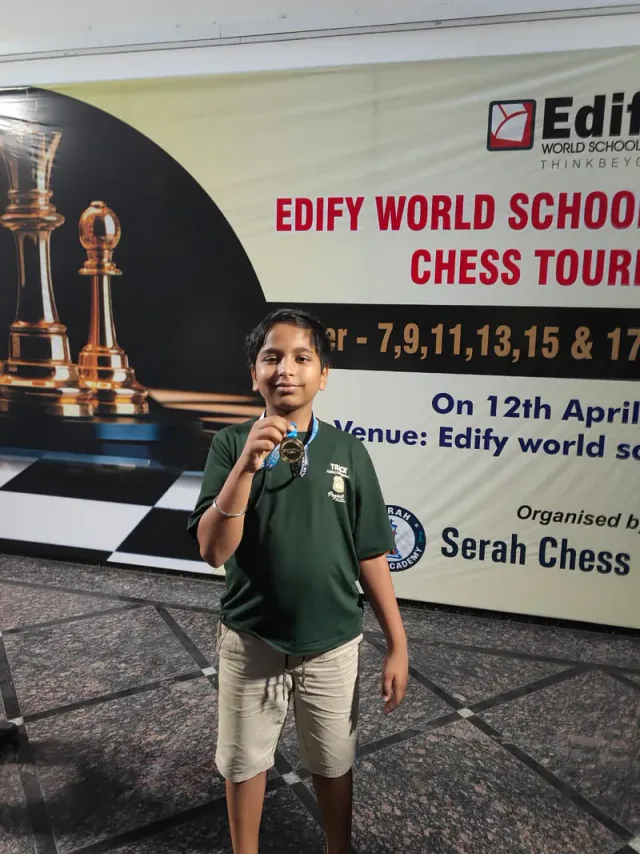
Group, two-on-one, or 1:1 — your call after the free level check.
Most parents start with the level check, then switch format if needed. Monthly plans: full refund within 48 hours of enrolling.
1,500+
Parents trust us
1000+
Students coached
5.0
Rated on Google