
ChessWize Coaches and Results: FIDE-Rated Team
Meet ChessWize's FIDE-rated coaches, how we match kids, session structure, honest progress measures, and how to verify credentials yourself.

Day-to-day coach at ChessWize. 7+ years training students aged 5–15 across India, the USA, the UK, Singapore, Australia, and the Middle East. Known for structured, interactive sessions that turn nervous beginners into tournament-ready players.
On this page
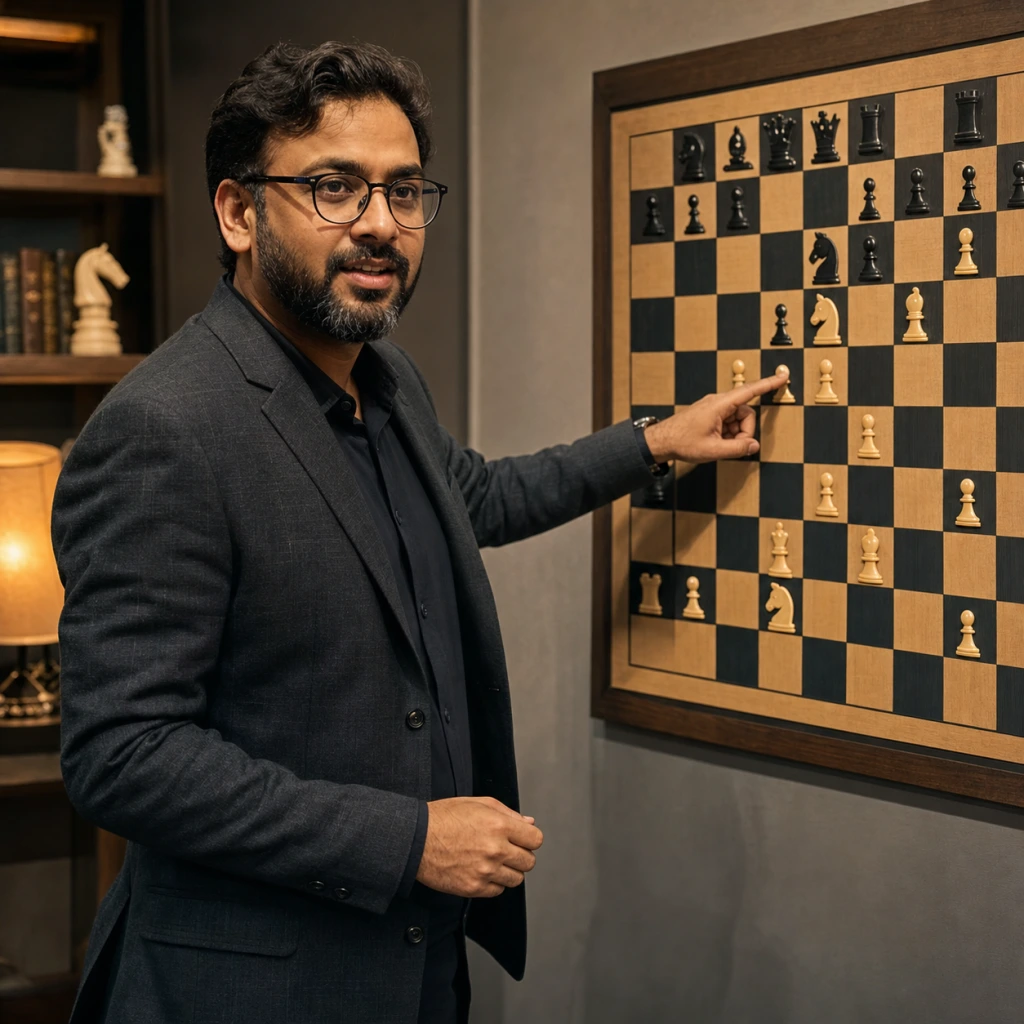
ChessWize is a live online chess academy for kids ages 5–15 taught by FIDE-rated founding coaches — Tarun Gupta (1920), Hrdyansh Pandey (1850), and Aryan Pal (1780) — with small batches of at most six, private formats, weekly WhatsApp parent notes, a free 30-minute demo, and refunds on unused classes under plan terms. This page is the open book on who teaches, how we match students, how a session runs, and which results we will and will not claim.
ChessWize, the site you are reading, runs the programme described below. We are online only — there is no ChessWize physical centre. If you want a neutral parent checklist before any academy, use how to pick a chess coach for your child and how to find a FIDE-rated chess coach. For product mechanics, see how online chess classes work.
Why we hire FIDE-rated coaches#
Direct answer: a FIDE rating is a public competitive number, not a certificate you buy, so parents can verify playing strength independently on ratings.fide.com.
The Elo system updates from rated games against other rated opponents. For a parent, that means three useful things:
- Playing strength: A coach in the high 1700s–1900s has shown they can compete well beyond beginner rules knowledge.
- Shared competitive language: Coaches who have sat at AICF boards understand clocks, notation, pairings, and the nerves your child will meet later.
- Accountability: Rating history is public. You can see activity and movement over time rather than trusting a brochure line.
We do not treat Chess.com or Lichess ratings as hiring credentials. Those platforms are excellent for practice — and we assign homework there — but their numbers are not interchangeable with FIDE or AICF ratings and are not federation credentials. For more on platform ratings versus federation ratings, see online chess coaching for kids in India.
Important honesty note: a high rating does not automatically mean someone can teach a restless seven-year-old. Teaching skill is separate. We hire for both, and the free demo exists so you can judge fit yourself rather than trust a title alone.
Our coaching team#
Each founding coach holds a published FIDE rating on ChessWize materials. Cross-check names and IDs on ratings.fide.com and on the individual coaches profiles before you enrol anywhere — including with us.
Coach Hrdyansh Pandey — Co-Founder, CMO, Lead Coach#
I handle a large share of day-to-day live coaching, tournament-prep tracks, and parent reporting. My published FIDE rating on ChessWize materials is 1850, with FIDE ID listed as IN-25600184 for lookup. I have coached for 7+ years, with programme-level experience across students in India and diaspora families in the USA, UK, Singapore, Australia, and the Middle East. As a junior I competed through school and district events, including a 5th place in the Kanpur District U-15 Championship among other CBSE and inter-school finishes between 2010 and 2019.
What I actually do in sessions: tactical pattern work, game review from the child’s own PGN, and practical prep for the next school or AICF-rated event — not abstract lectures. Full profile: Coach Hrdyansh Pandey.
Coach Tarun Gupta — Founder & CEO#
Tarun’s published FIDE rating on ChessWize materials is 1920. He brings 10+ years in chess, curriculum design, and senior-cohort 1:1 work. ChessWize’s structured-curriculum approach comes largely from his insistence that children struggle less when ideas are sequenced clearly — not when a coach improvises every week.
In practice he leans into tactical development, opening structure for intermediate students, and quality control on educational content. Full profile: Coach Tarun Gupta.
Coach Aryan Pal — Founder & COO#
Aryan’s published FIDE rating on ChessWize materials is 1780. He specialises in beginner pedagogy and ages roughly 5–10: story-driven explanations, restless-kid classroom management on video, and the onboarding flow that stops first-month drop-off. He also co-designed the structured-cohort programme operations.
If your child is brand new to piece moves, Aryan’s lane is usually the right first conversation. Full profile: Coach Aryan Pal.
Collective programme signals we publish and stand behind: 1,000+ students coached at the programme level, 1,500+ parents in marketing trust copy, 5.0 on Google from 21 reviews, ages 5–15, English or Hindi, same coach every session as the default operating rule, weekly WhatsApp parent reports, free 30-minute demo, and refund on unused sessions under plan terms. Browse the team grid on the coaches page and formats on courses.
How we match students with coaches#
Not every coach is the right fit for every child. We match on three factors.
1. Level and goals
- Absolute beginners and early foundations (especially younger kids) → often Aryan’s lane for patience and story-first teaching.
- Intermediate tactical and opening builders → often Tarun’s curriculum-driven sessions or mixed group cohorts.
- Tournament-prep and competitive-track students → often my sessions for game review and event focus.
These are starting heuristics, not rigid caste. A quiet advanced nine-year-old may still thrive with a different coach’s style.
2. Learning style on the demo
During the complimentary 30-minute demo we watch how the child responds: visual stories versus puzzle drills, need for jokes versus need for quiet structure, English versus Hindi comfort. Matching style beats matching the highest rating number on paper.
3. Scheduling reality
We match available slots to the family calendar, including school load and exam seasons. Online delivery means a child in Mumbai, Delhi NCR, Bengaluru, or a smaller city uses the same coach pool — no branch office required.
If the match feels wrong after two sessions, we discuss a coach switch without treating it as a failure. Chemistry matters. For format choice (group versus private), read group vs private chess classes and the compare page.
Deep dive: how I evaluate a child in the free 30-minute demo#
Parents sometimes treat the demo as a sales call. I treat it as a placement lab. Here is the method I run so you know what a FIDE-rated coach session looks like with a real child on a shared board — and so you can judge any academy’s trial with the same checklist.
Minutes 0–3 are human, not chess. I want the child talking: name, grade, whether they have a physical board, whether they use Lichess or Chess.com, and what they like about chess if anything. A child who only says “my parents enrolled me” needs a different first month than a child who already solves puzzles for fun. I note English, Hindi, or mixed preference, because the wrong language kills calculation talk.
Minutes 3–10 are a rules and vision screen, not a scored exam. I check starting setup (or one deliberate setup error), then a short “checks, captures, threats” scan on a simple position — Knight on f3, a slightly open King, a hanging pawn. I am watching process: do they grab the first fun piece, or scan the board for a few seconds? Do they respect absolute pins and checks, or try illegal escapes? That alone separates “needs rules repair” from “ready for a tactics ladder.”
Minutes 10–18 are one micro-lesson only — usually a Knight fork or absolute pin — using the empty-board method in our tactics for kids guide, then reverse colours to defend. I am testing chemistry: does the child light up when they discover the move, or shut down when corrected? Parents should ignore instant success. Willingness to try again after a miss predicts more than raw speed in month one.
Minutes 18–25 are a short play fragment or level-matched puzzles. True beginners may only do a pawn race or a king-and-rook mate attempt. Intermediates might review two moves from a game they already played. I never dump twenty moves of opening theory in a demo; it flatters the coach and tells the parent nothing about fit.
Minutes 25–30 are plain parent feedback: “Knows piece moves, hangs pieces when checked, not ready for opening memorisation” or “Solid on basic forks, needs endgame mates and slower clocks.” Format follows published prices — group ₹375, two-on-one ₹550, 1:1 ₹1,000, starter pack ₹2,500 for eight classes — plus ages 5–15, max six per group, same coach weekly, weekly WhatsApp note, refund on unused classes under plan terms, online only.
What I refuse matters as much as what I say. No rating number by calendar date. No claim that we outrank every academy or that every child becomes titled. If the child is not ready for live video, I say wait. Wrong enrolment fails even if the fee clears. Compare via choosing chess classes for kids, best online chess classes for kids in India, and chess class fees comparison India. Run this checklist on every trial, not only ours.
Our coaching methodology#
Every ChessWize session follows a structure adapted for live video and a shared digital board.
First ~10 minutes — puzzle warm-up. Three to five tactics puzzles at the student’s level. This wakes pattern recognition before new material.
Next ~25 minutes — core instruction. One topic: a tactical motif, an opening structure, an endgame pattern, or a strategic idea. Demonstrate, then the student practises immediately. Listening without moving pieces is not a full lesson.
Final ~15 minutes — guided play or game fragment. The student plays against the coach or a peer while I observe, then we extract one learning point. Not a twenty-error laundry list.
Between sessions — homework. Usually a short puzzle set on Lichess or Chess.com, sometimes one game to review. Completion feeds the next warm-up. For home routines by level, see the chess homework and practice plan.
Progress reviews#
About every eight sessions we pause for a structured review against stage-appropriate markers:
- Tactical accuracy: Are puzzle themes from class transferring, or only succeeding with hints?
- Opening understanding: Are they playing prepared ideas with reasons, or reciting moves they cannot explain?
- Competitive habits: For event-track students — notation, clock awareness, emotional reset after a loss.
Parents receive plain language, not vanity metrics. If progress stalls, we change focus, homework difficulty, or format. If the child is racing ahead, we advance the syllabus rather than repeating easy material for billing optics.
How we talk about student results (honestly)#
“Results” is the most abused word in chess marketing. Here is our policy.
What we measure
- Consistency of attendance and homework completion
- Qualitative thinking: do they scan checks, captures, threats before moving?
- Puzzle accuracy trends on the platforms they already use
- For rated players: game quality and participation in AICF or school events when the family chooses that path
- Parent-visible notes: weekly WhatsApp reports that name topics covered
What we do not invent
- Fabricated tournament medals or unnamed “state champions”
- Promised Elo gains sold as certain
- Fixed improvement calendars dressed as coaching science
- A physical ChessWize centre with OTB league tables
What is still being collected carefully
Detailed, consent-based student case studies with verified event records need parental approval and clean documentation before we publish names and numbers. Until a story is cleared, we will not dress anecdotes as a statistics dashboard. Public social proof that is already published includes the 5.0 Google rating from 21 reviews and the programme-level 1,000+ students / 1,500+ parents trust figures. Parent-facing stories that pass review appear on success stories when available.
On titled pathways: CM and FM thresholds (commonly referenced at 2200 and 2300 Elo under FIDE title structures) are multi-year competitive projects, not class-pack outcomes. We will document a student’s journey only with permission and real rating lists — never with marketing fiction.
If your goal is rating growth process (not a promised number), read improve your child’s chess rating and FIDE rating and Elo for kids.
How to verify our credentials#
Do this for every coach you consider:
- Open ratings.fide.com.
- Search by name or FIDE ID from the coach profile.
- Check federation, rating, title (if any), and rating history.
- Match the ID to what the academy publishes.
- Ask how often the coach still plays rated games.
If anything does not match, stop and ask for clarification before paying. We would rather lose a rushed enrolment than onboard a family on fuzzy credentials. The same verification habit is the core of FIDE-rated coach literacy for parents.
Pricing and formats (published facts)#
| Format | Published price | Typical fit |
|---|---|---|
| Group (max 6) | ₹375 / session | Steady weekly growth with peers |
| Two-on-one | ₹550 / session | Siblings or focused pairs |
| 1:1 | ₹1,000 / session | Attention needs, uneven gaps, tournament prep |
| Starter pack | ₹2,500 for 8 classes | Bounded first commitment |
| Demo | Free 30 minutes | Placement and chemistry check |
Also published across the site: refund on unused classes under plan terms; same coach every session as the operating standard; ages 5–15; English and Hindi. Start from courses, compare, or city pages such as Kanpur online chess classes if you want local SEO context — delivery remains online nationwide.
Expert tips for parents hiring any online coach#
These are the checks I tell friends to run even if they never join ChessWize:
- Verify the FIDE profile before the second payment. Screenshots in ads are not verification. Use ratings.fide.com yourself.
- Watch the demo for teaching, not for the coach’s rating flex. The right question is whether your child understood one clear idea and wants another session.
- Demand a weekly parent note with topics, not adjectives. “Great game today!” is not a report. “Worked absolute pins; homework: 10 pin puzzles” is a report.
- Prefer small live groups or true 1:1 over huge webinars. Attention is the scarce resource. Our cap is six for a reason; ask other academies what their cap actually is.
- Reject outcome-promise language. Anyone who sells a fixed rating outcome as certain is overselling what the Elo system can offer. Look for process, refunds on unused classes, and a free trial instead.
Frequently Asked Questions#
Are ChessWize coaches FIDE-rated?#
Yes. ChessWize lists FIDE ratings for its founding coaches on the public coaches pages: Tarun Gupta 1920, Hrdyansh Pandey 1850, and Aryan Pal 1780. You should still verify any coach you hire on ratings.fide.com using the name or FIDE ID shown on their profile.
Can I request a specific coach?#
Yes. Tell us during the free 30-minute demo if you prefer a particular coach based on age fit or style. We accommodate requests when scheduling allows, and we can discuss a switch if the first match is a poor fit after a couple of sessions.
What happens if my child’s coach leaves ChessWize?#
We keep more than one coach able to teach each student level. If a transition is needed, we introduce the new coach with overlap so the child is not dropped into a cold handoff. Same-coach continuity is the default; change is the exception.
Do ChessWize coaches still play competitively?#
Active play is an expectation for the team, not a slogan. Coaches who keep playing stay sharper on clock handling, opening practice, and the emotional load of rated games — the same pressures students face in AICF events.
How much do ChessWize classes cost?#
Published rates are group ₹375 per session, two-on-one ₹550, and 1:1 ₹1,000, with a starter pack at ₹2,500 for eight classes. The 30-minute demo is free. Unused classes are refundable under plan terms. Full detail sits on the courses page.
Does ChessWize have a physical centre?#
No. ChessWize is live online only. Children join by video with a shared board, ages 5–15, English or Hindi, batches of at most six or private formats. Local over-the-board clubs and school events remain useful for in-person play.
Next reading#
Hrdyansh Pandey
Day-to-day coach at ChessWize. 7+ years training students aged 5–15 across India, the USA, the UK, Singapore, Australia, and the Middle East. Known for structured, interactive sessions that turn nervous beginners into tournament-ready players.
View FIDE ProfileReferences & Sources
- [01] FIDE publishes official player ratings and titles on the public ratings site — https://ratings.fide.com/, verified 2026-07-16
- [02] FIDE Master is associated with the 2300 rating threshold and Candidate Master with 2200 under FIDE title regulations summarised on FIDE resources — https://www.fide.com/, verified 2026-07-16
- [03] AICF is India's national chess federation for registration and rated events — https://aicf.in/, verified 2026-07-16
- [04] The Elo rating system updates from rated game results and is explained for general readers on Wikipedia — https://en.wikipedia.org/wiki/Elo_rating_system, verified 2026-07-16
- [05] FIDE handbook materials document Laws of Chess used in official play that coaches prepare students for — https://www.fide.com/FIDE/handbook/LawsOfChess.pdf, verified 2026-07-16